

Most Viewed Pure Sound Videos on Automann-TV
The PURE SOUND blog posts with the most tracked views on Automann-TV — the engine and exhaust clips viewers open most often, ranked by popularity rather than by sound quality.
10 videos · ranked by tracked views
Ranked by Automann-TV blog-post views
The order is based on tracked views for each blog post. When a video appears here, it means viewers repeatedly opened that Automann-TV article and video page.
Current #1: RS3 Facelift | Golf R 8.5 | Clubsport 8.5 | S3 Facelift | SOUND💥 & 100-200 km/h accelerations🏁 with 279 views.
- #1
Pure Sound
279 views
5:51RS3 Facelift | Golf R 8.5 | Clubsport 8.5 | S3 Facelift | SOUND💥 & 100-200 km/h accelerations🏁
Dec 15, 2024
- #2
Pure Sound
249 views
10:36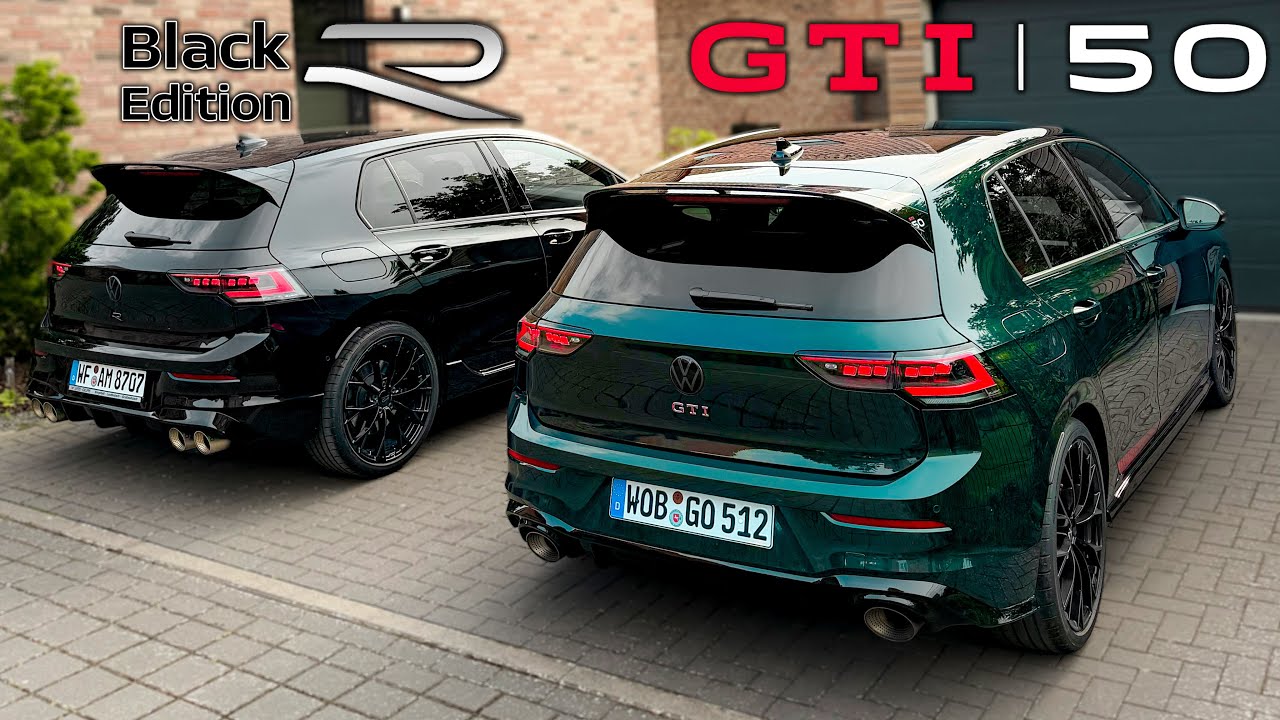
GTI Edition 50 vs. Golf R 8.5 BLACK | full acceleration & SOUND comparison🏁| by Automann in 4K
May 10, 2026
- #3
Pure Sound
188 views
3:42
Audi R8 V8 vs. V10 PLUS - pure SOUND (60FPS)
Sep 11, 2016
- #4
Pure Sound
188 views
1:48
2016 Audi A6 Avant 3.0 TDI Competition (346hp) - pure SOUND (60FPS)
Jan 1, 2016
- #5
Pure Sound
187 views
16:13
NEW! Audi RS5 Avant (640hp)| pure SOUND & Review💥| by Automann in 4K
Feb 19, 2026
- #6
Pure Sound
179 views
4:17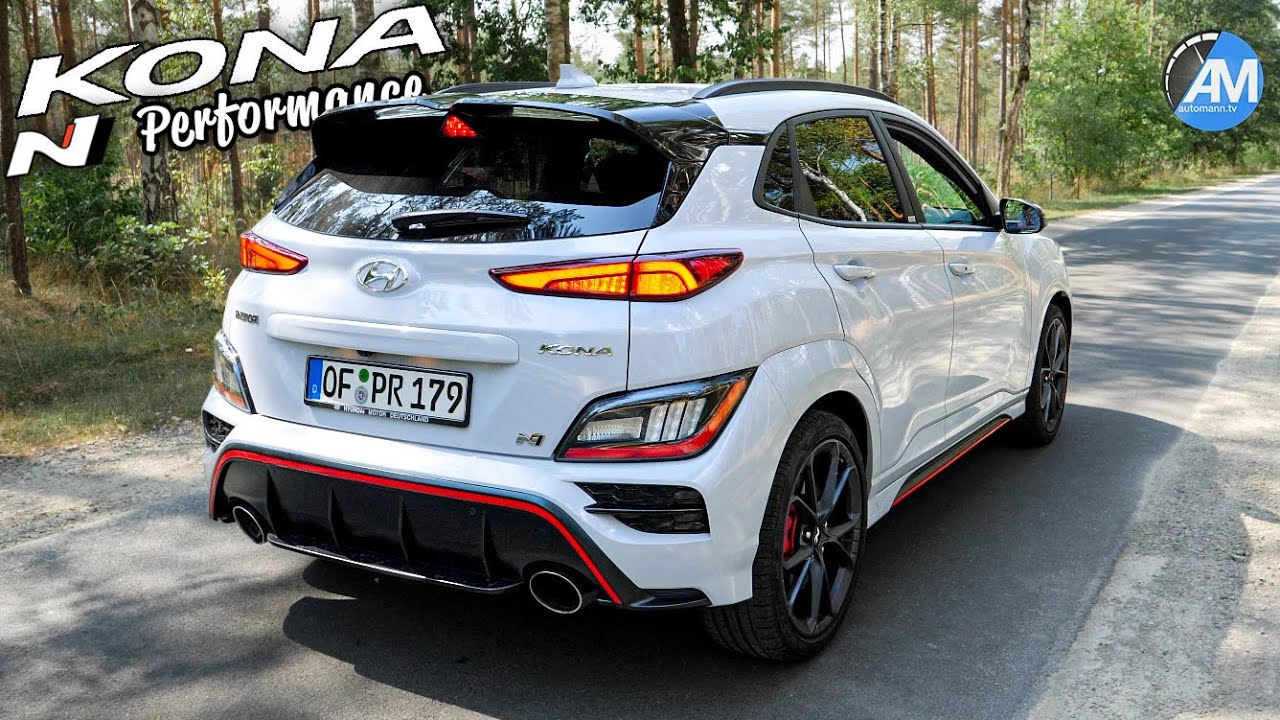
2022 Hyundai Kona N Performance | pure SOUND💥 | Automann in 4K
Sep 4, 2022
- #7
Pure Sound
164 views
4:54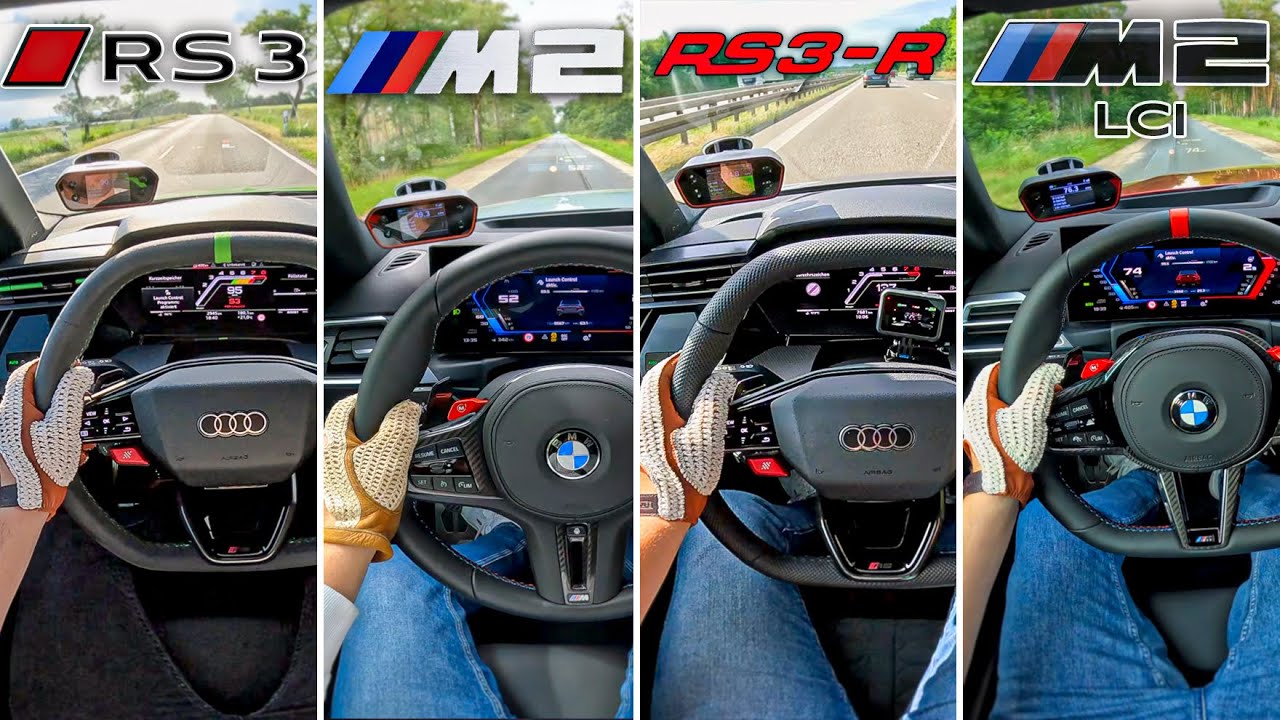
RS3 Facelift | M2 | RS3-R | M2 LCI | SOUND💥 & 100-200 km/h accelerations🏁
Oct 12, 2025
- #8
Pure Sound
150 views
3:21
NEW! V12 REVUELTO (1015hp) | pure SOUND🔥| by Automann in 4K
Dec 22, 2024
- #9
Pure Sound
147 views
3:50
Mercedes C63 AMG (original)| pure naturally aspirated 6.2 liter SOUND🔥 | Automann Originals
Apr 2, 2022
- #10
Pure Sound
136 views
3:45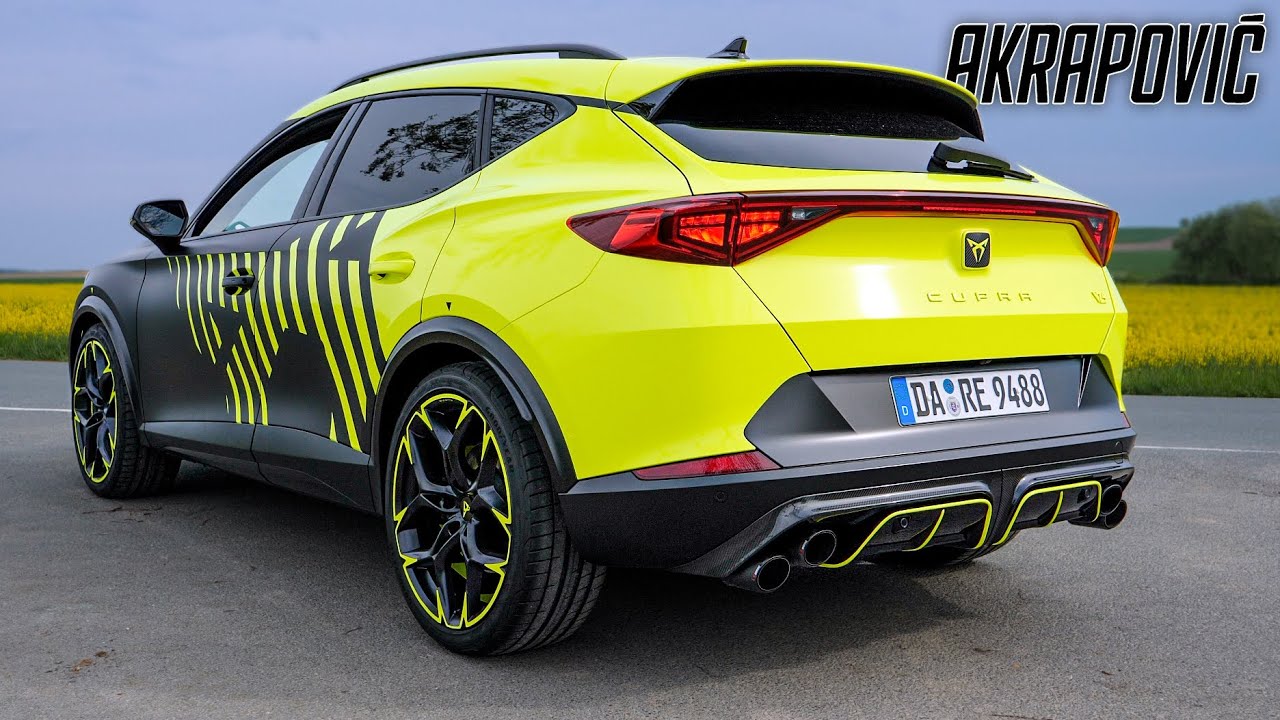
CUPRA Formentor VZ5 | Sweet Akrapovic 5-Cylinder SOUND🔥| by Automann in 4K
May 20, 2023
Most viewed pure sound videos: how to judge engine sound
Every clip in this ranking was recorded by Automann-TV with the same approach: external microphones, no music, no artificial engine noise. What you hear is the car itself — cold start, idle, revs, upshifts and overrun.
The order of the list is driven by how often viewers come back to each video, so it reflects real listening behaviour rather than an opinion score. Use the guide below to understand why some of these cars sound the way they do, then listen for yourself.
Cylinder count and engine layout set the character
Cylinder count and firing order decide the basic tone. Flat-plane V8s and V10s produce a high, flat, motorsport-like howl, while cross-plane V8s give the deeper burble most people associate with American muscle. Inline-sixes are prized for their smooth, even sound because the design is inherently balanced.
Flat-six engines have their own signature caused by the offset cylinder banks and unequal exhaust runner lengths, and five-cylinder engines produce the distinctive off-beat warble found in rally-derived cars.
Naturally aspirated vs turbocharged
A turbocharger sits in the exhaust stream and acts as a muffler, taking energy — and high-frequency detail — out of the sound. That is why naturally aspirated engines usually dominate pure-sound rankings: the intake and exhaust noise reaches the microphone with far less damping, and the revs climb further.
Turbo cars trade some of that clarity for other sounds: spool, blow-off and sharper overrun pops. Both are worth listening to, which is why this list mixes older naturally aspirated cars with modern forced-induction performance models.
Exhaust design, valves and mode selection
Modern performance cars ship with valved exhausts that open under load or in a sport mode. The same car can sound restrained in comfort mode and dramatic in its loudest setting, so in every Automann-TV recording the mode that is used is stated or audible in the video.
Aftermarket systems change the picture again. Rankings on this site keep factory and tuned cars separate where the data allows it, so a modified exhaust never gets credited to the standard car.
How to listen to these videos
Use headphones or a proper speaker set. Phone speakers cut the low frequencies that carry most of a V8's or V12's character, and compression on social platforms removes the fine detail of a cold start.
Pay attention to three moments: the first seconds after ignition, a full-throttle pull through the mid range, and the overrun when the throttle closes. Those three clips tell you more about a car's voice than any single number.
Frequently asked questions
- What makes a car sound good?
- Mainly cylinder count and firing order, whether the engine is naturally aspirated or turbocharged, the exhaust and manifold design, and how high the engine revs. Recording quality matters too: unprocessed external audio reveals detail that in-car footage loses.
- Do naturally aspirated cars sound better than turbo cars?
- Naturally aspirated engines usually deliver a clearer, higher-revving sound because no turbocharger sits in the exhaust flow to dampen it. Turbocharged cars offer different sounds — spool, blow-off and overrun pops — so it depends on what you want to hear.
- How is this best sounding cars ranking put together?
- It uses the most viewed PURE SOUND videos on Automann-TV, ranked by tracked views of each article and video page. There is no editorial scoring, so the list changes as viewer interest changes.
- Are the recordings modified or enhanced?
- No. Automann-TV records with external microphones and publishes the audio without added music or synthetic engine sound. Where a car has an aftermarket exhaust, that is noted in the video and in the vehicle data.